
The necessity of the useless. Philosophy, art, and history in corporate culture
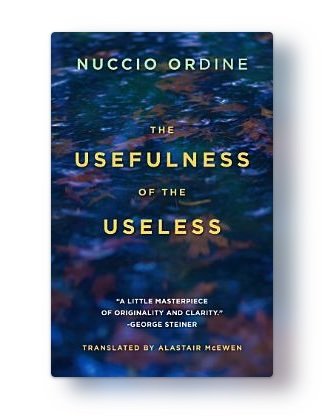
In his profound exploration of what he calls "useless" knowledge, Nuccio Ordine challenges us to rethink what we value in education, work, and life.
His work reveals the underappreciated power of disciplines such as the arts, philosophy, history, and music—fields thatare often dismissed as impractical in the fast-paced, results-oriented world we live in. Yet it is precisely these fields that hold the keys to unlocking deeper creativity, more meaningful collaborations, and a workplace culture rooted in curiosity and innovation.

Ordine's argument is simple but revolutionary: value does not always derive from utility. For companies, this means that investing in disciplines that may not directly impact short-term profits can have profound long-term effects. When employees engage with art or literature, when they ponder philosophical questions or immerse themselves in history, they begin to see the world—and their work—from a broader perspective. This expanded perspective not only enriches their personal lives, but also transforms how they approach complex problems, paving the way for unexpected innovation.
Promoting creativity and problem solving
The arts and humanities foster precisely the traits that make teams thrive: creativity, perspective, and empathy. For example, studying philosophy encourages critical thinking and the ability to examine ideas from multiple angles. History gives us the wisdom of hindsight, helping us understand context and learn from past patterns. Music and the arts spark our imagination, giving us the courage to think beyond the conventional. These disciplines cultivate agile and adaptable minds, essential skills in a workplace where change is the only constant.
Consider this in a business context. A team that has participated in artistic disciplines is more likely to question assumptions, generate new ideas, and collaborate meaningfully. Sharing creative experiences—a concert, an art exhibition, a dialogue about literature—brings with it a vulnerability and openness that translates into deeper trust and communication within teams.



Toward a more enriching work culture
Beyond practical outcomes, the humanities foster a work culture based on shared human values. Philosophy teaches us to approach conversations with curiosity rather than judgment. How powerful could this mindset be in a team meeting or negotiation?
Literature and art deepen empathy by allowing us to put ourselves in the shoes of others, whether they are colleagues, customers, or communities. History reminds us of our interconnectedness and the impact of our decisions on the future.
Ordine suggests that these disciplines cultivate a sense of self that is often lacking in environments dominated by data and deadlines. By prioritizing human growth alongside professional development, companies can create spaces where employees feel valued not only for what they do, but for who they are.
Unexpected innovation and personal growth
The paradox of "useless" knowledge is that it often produces the most surprising and rewarding results. Employees who have spent time reflecting on philosophical questions or trying to understand the meaning of a novel are more likely to approach business challenges with new and bold ideas. This is the kind of innovation that companies seek but cannot force: growth sparked by personal enrichment and curiosity.
Humanistic knowledge, culture, and education constitute the ideal amniotic fluid in which the ideas of democracy, freedom, justice, secularism, equality, the right to criticism, tolerance, solidarity, and the common good can enjoy vigorous development.
Promoting these disciplines in the workplace can involve offering experiences such as cultural workshops, storytelling sessions, or even simple acts such as making space for creative dialogue. These investments send a clear message to employees that their development is important, not only professionally, but also personally and humanly. And when employees feel enriched, they bring their best selves to work.
A call to action
Nuccio Ordine reminds us that the best ideas often arise when we have the freedom to explore, imagine, and reflect. Companies have an extraordinary opportunity to lead the creation of more thoughtful, inclusive, and innovative workplaces by investing in the humanities, not as a luxury, but as a necessity.
Art, philosophy, history, and music are not just disciplines; they are instruments that lead us to discovery. Companies acquire something much more valuable than immediate results: they cultivate an environment where employees grow, organizations evolve, and the world is enriched with a little more knowledge.
At The Human Element, we advocate for a connected approach to business success that merges innovation, empathy, and culture. Ready to unlock your team's potential?
Invest in impactful team-building activities that foster deeper connections. Book your cultural experience today to see how art and creativity can improve workplace relationships. Together, we can cultivate a more engaged, creative, and empathetic business world.